Blog

Most people who start strength training set a goal. They want to get stronger, build muscle, lose fat, or just feel better in the gym. The problem is not that these goals are bad. The problem is that they are too vague to actually guide a program. A goal like get in shape or get stronger sounds motivating, but it does not tell a coach or a program what to prioritize. It does not say how much stronger, doing what, or by when. Without that detail, training becomes reactive instead of directed. People show up, do whatever feels productive that day, and hope it adds up to something. Strength is built over months and years, not single workouts. A goal that cannot be measured or tracked makes it almost impossible to know whether the plan is working or whether it is time to change direction. Vague Goals Do Not Create...
Read more
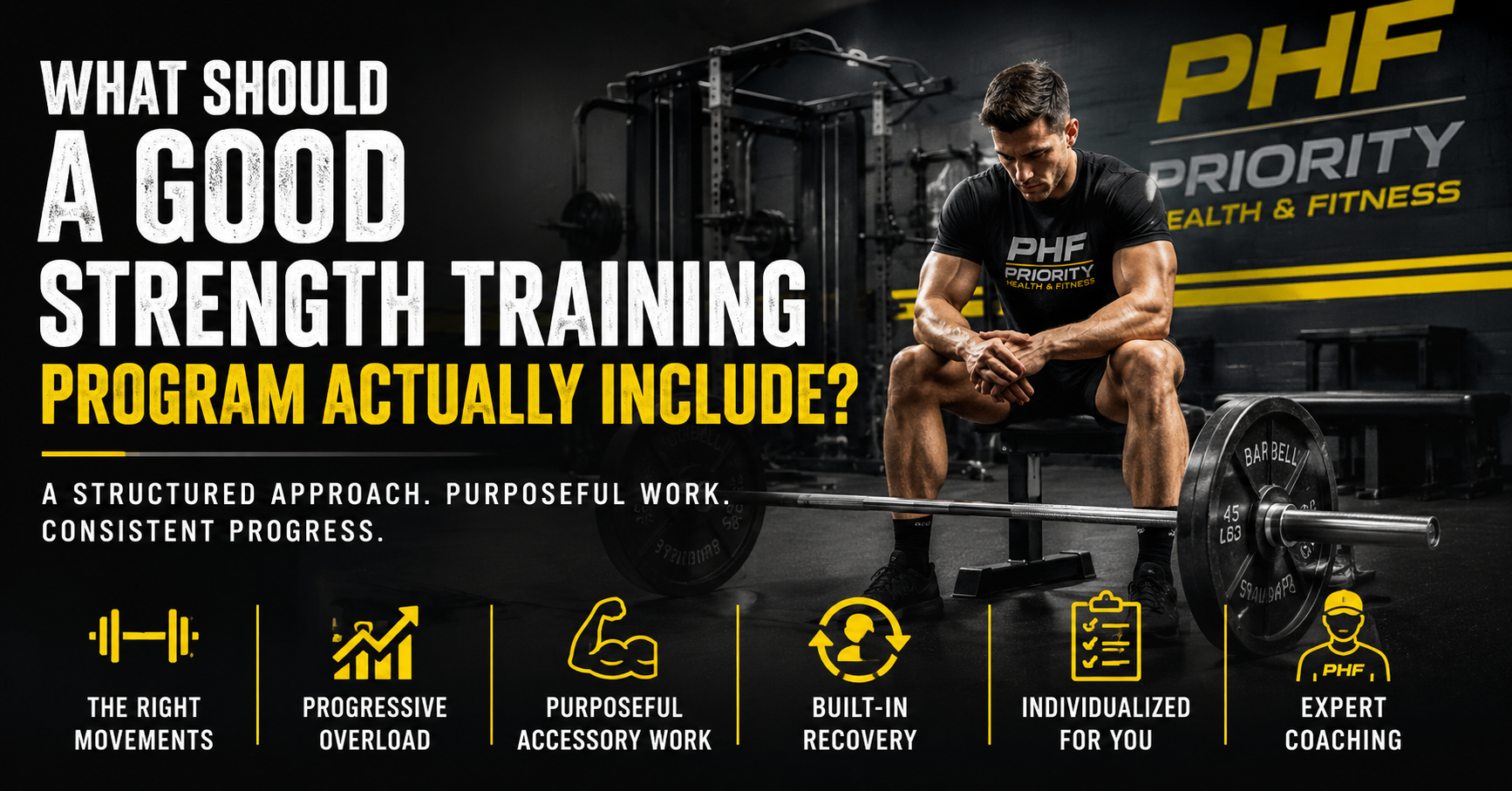
Priority Health & Fitness strength training program graphic showing a lifter in a gym with icons for movement selection, progressive overload, recovery, individualized training, and coaching.
A good strength training program is more than a random list of exercises. It should include structure, progression, purposeful movement selection, recovery, and coaching that helps each person build real strength safely and consistently.
Read more
Priority Health & Fitness strength training graphic showing an athlete deadlifting beside a weekly workout schedule with training days highlighted.
How many days a week should you strength train to see results? For most adults, two to four well-planned sessions can build strength, improve fitness, and create lasting progress without requiring you to live in the gym.
Read more
Priority Health & Fitness strength training gym featuring premium equipment and tips for choosing the right gym.
Choosing the right gym can make the difference between staying motivated and giving up. Learn the eight things you should look for before signing up.
Read more
Recovery is part of strength training featured image highlighting sleep, nutrition, stress management, and recovery for long-term strength development
Most people think strength is built during workouts, but real progress happens between training sessions. Learn why sleep, nutrition, stress management, and recovery play a critical role in building long-term strength.
Read more
1 2 3 44